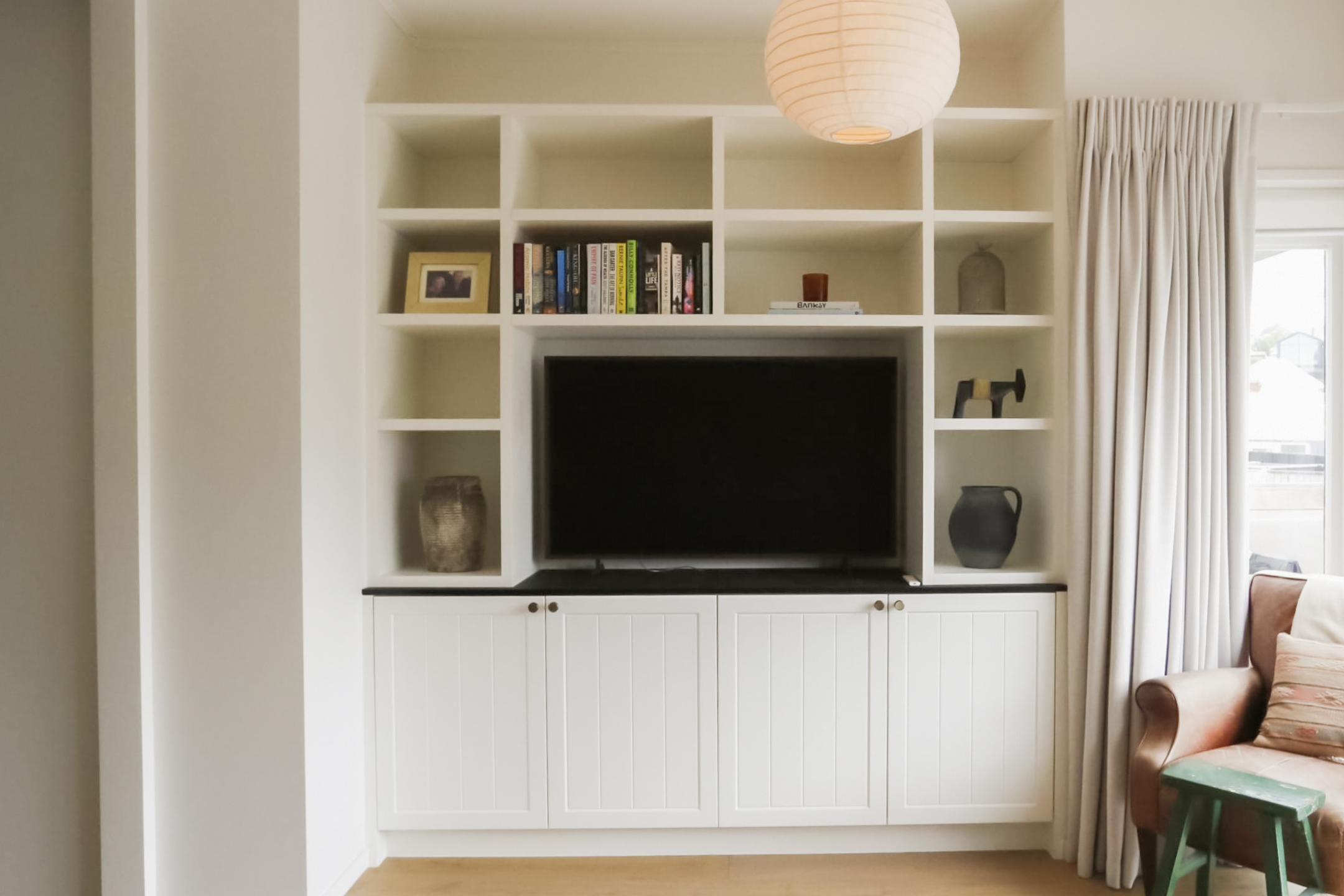
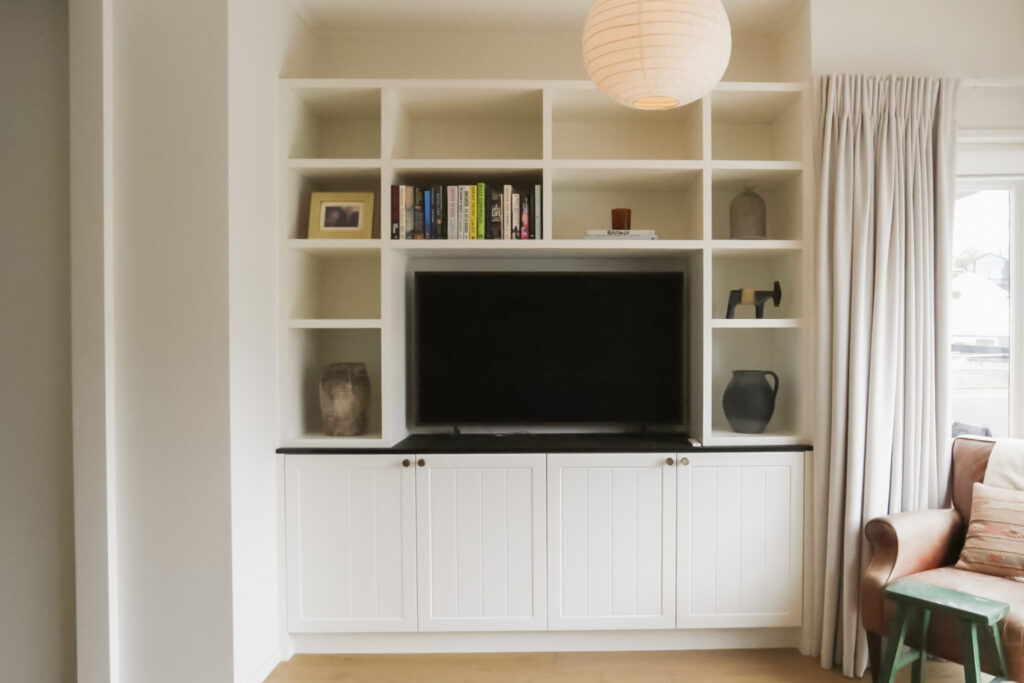
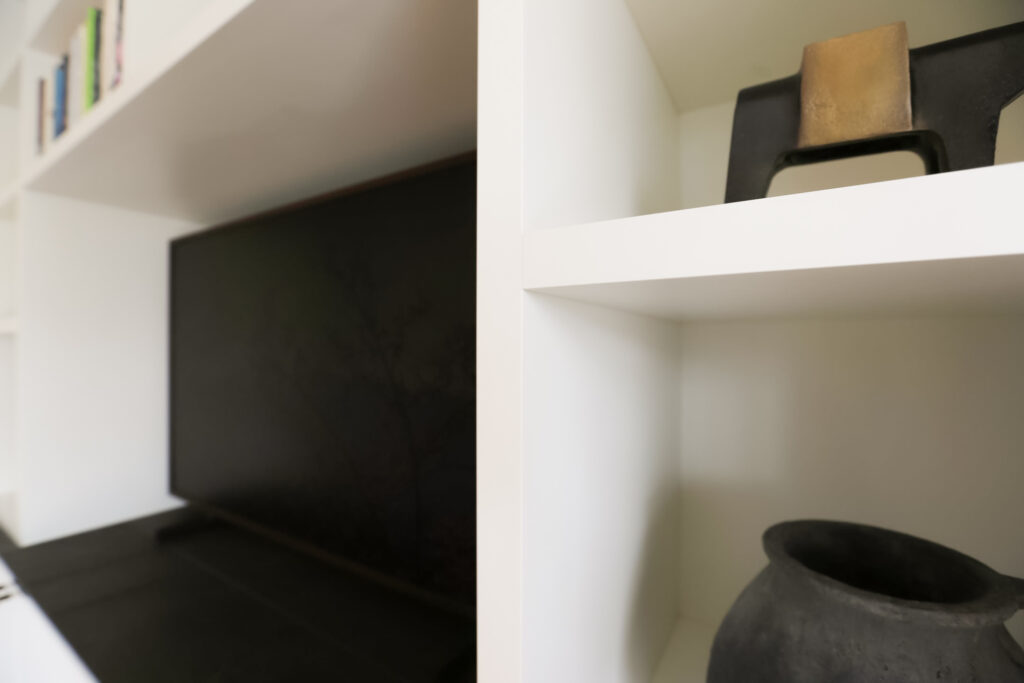
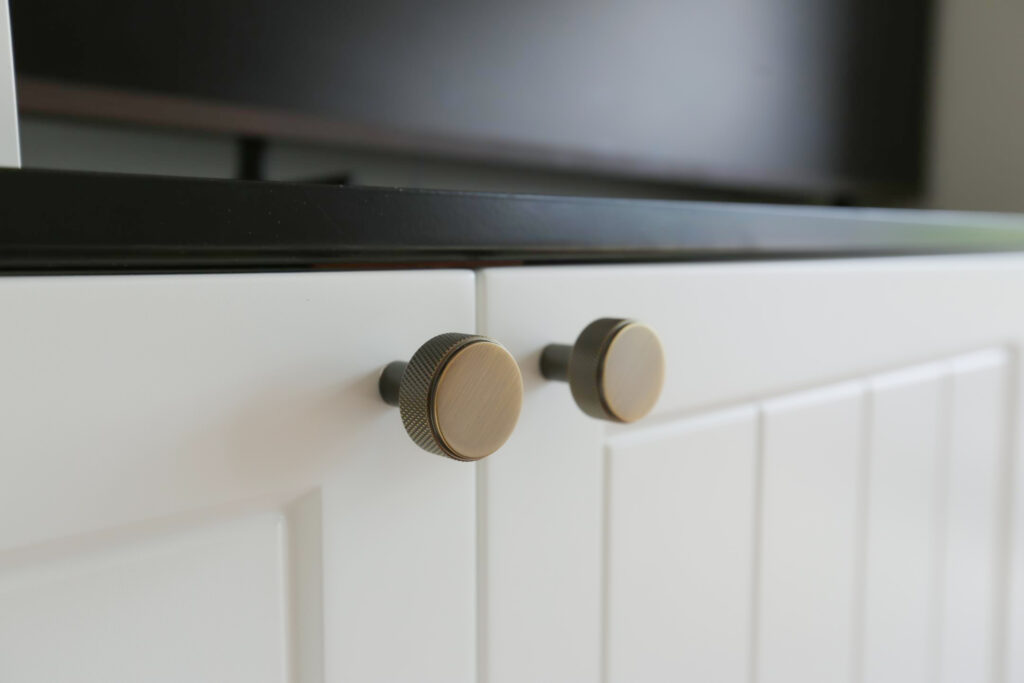
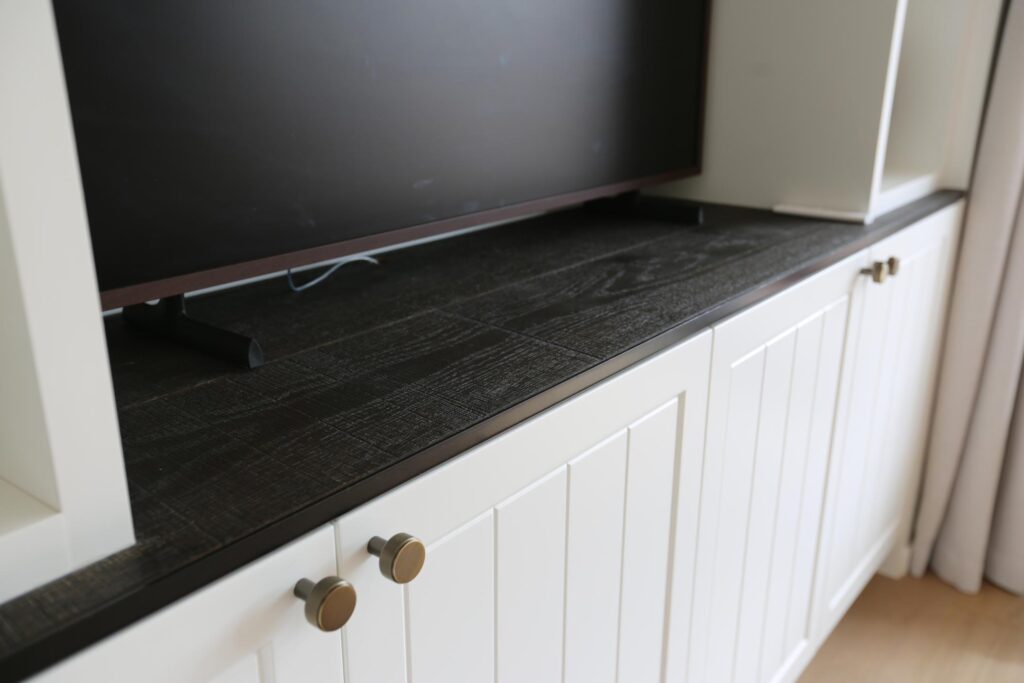
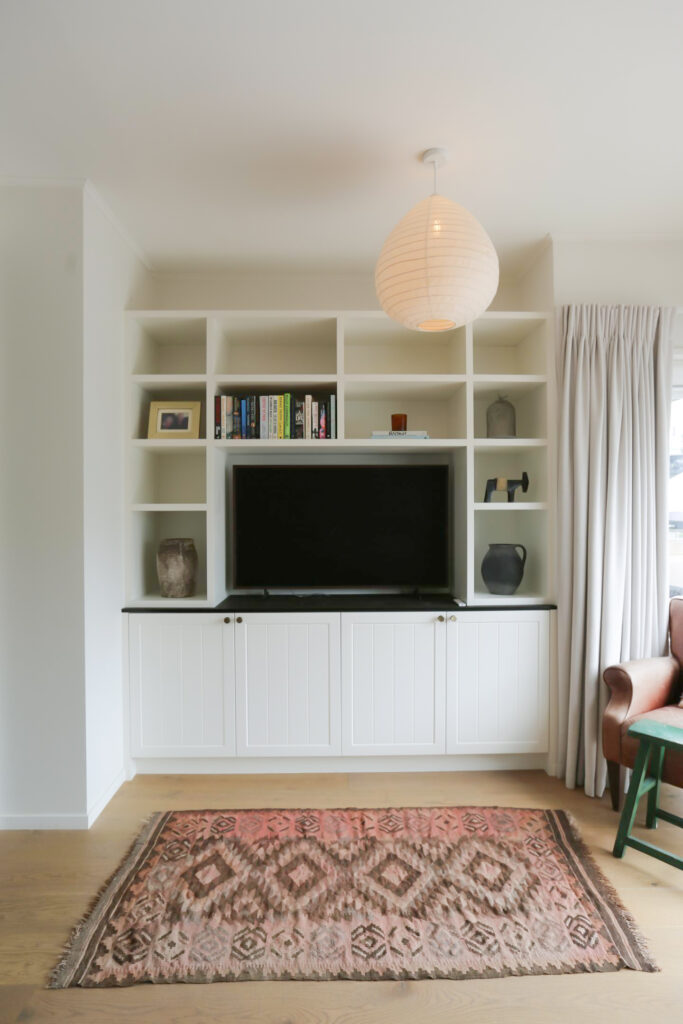
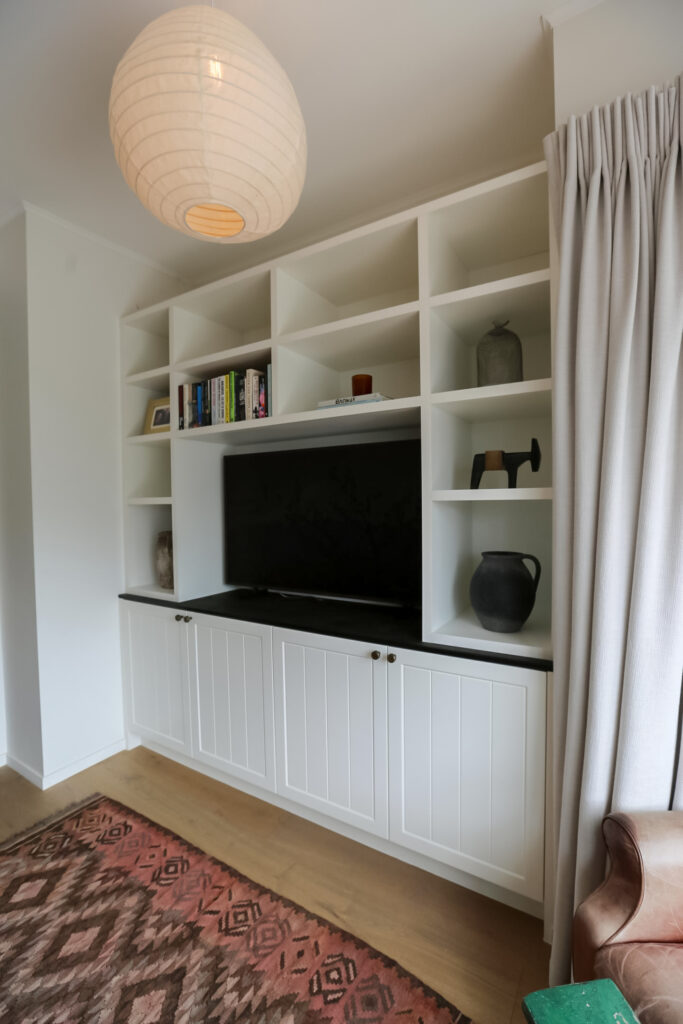
As part of our upgrade package for our Freeman’s Bay project, BoxMakers crafted a highly accommodating custom TV cabinet. Precision cut and perfect to the millimetre, this TV unit was purpose-built to fit a specific space within this home.
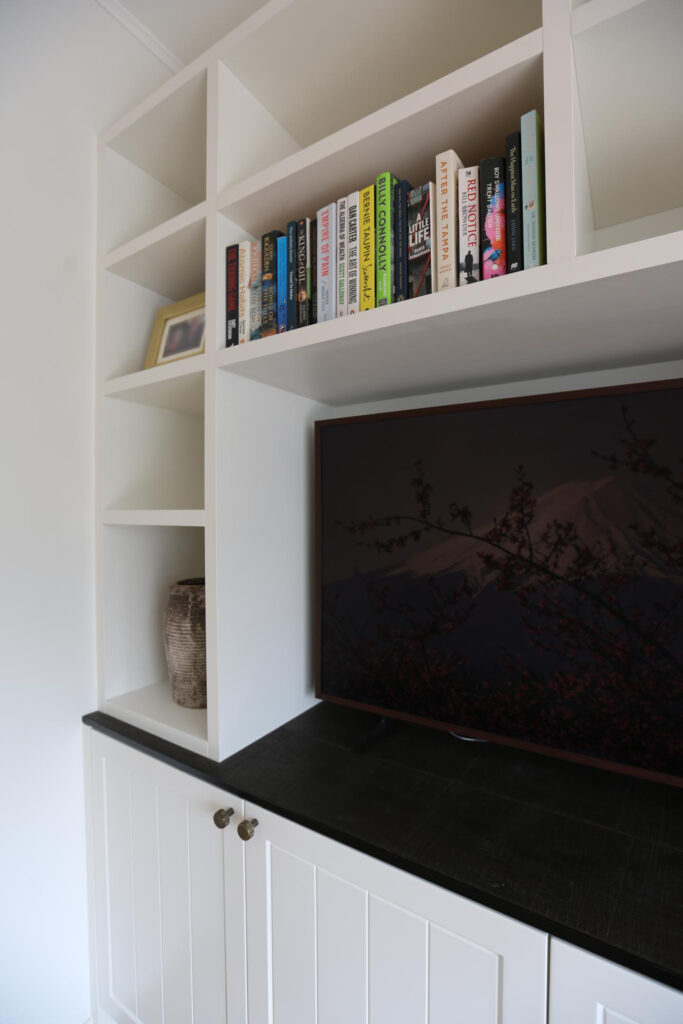
Slotted perfectly into the living room alcove, this brand new BoxMakers TV cabinet stands tall with 4 layers of shelving atop a quadruple doored set of cabinets. Starting from the top, the unit’s apex sits exactly flush with the room’s curtain rod. Finished with smooth Quarter Thorndon Cream from Prime Panels, this nuanced white blends perfectly with the living room.
With the body made out of double-thickness MDF thanks to joined panels, the shelves’ rigidity is second to none. The thick, custom joined panels were chosen specifically to accommodate sculptures and antiques, and can of course double as a bookshelf.
At the centre, we’ve created room enough to comfortably fit TVs up to 58 inches, making for a great viewing experience. Perfect for movie night, yet subtle and seamless, this unit is highly capable without being flashy.
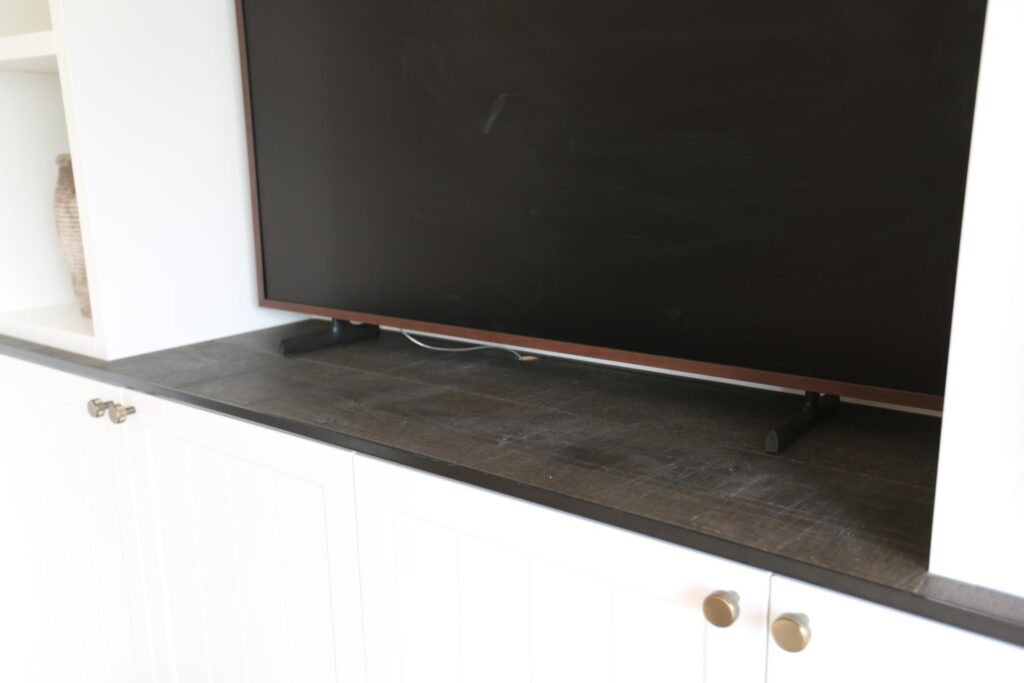
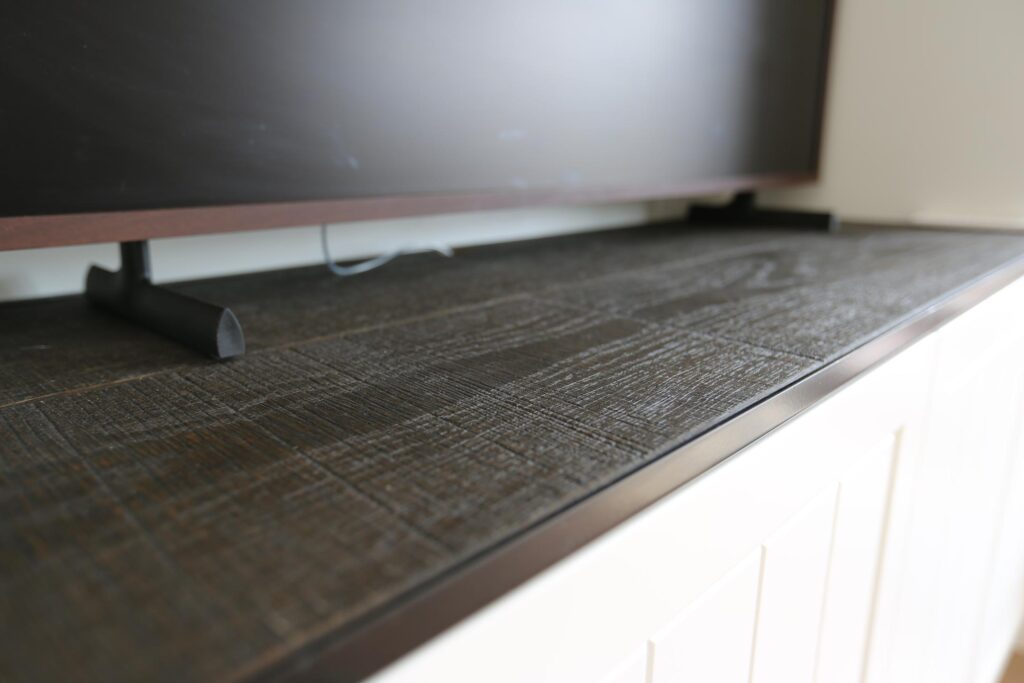
Making a returning appearance from the kitchen, Forté’s Ebony Rustic Plank serves as the tabletop. Its textured European Oak face adds maturity and elegance. Of note is the black, powder-coated steel edge we paired with it, which was custom ordered from TFW.
Altogether, this custom TV unit makes the most of an alcove space to hide what needs to be hidden and flaunt what is to be shown – all while possessing the elegance, maturity, and subtlety of a smart, modern home solution.
Designed by: Mona Simathamchai
Looking for new cabinetry or thinking about a kitchen renovation? Call us on 09 827 1177, or send us an email at [email protected]
As the beating social heart of your home, your living space is where everything happens. From immersive movie nights to frenetic family gatherings, it comes as no surprise that your lounge is the happiness hub of any house. So how does one make a living room tailored for every scenario? The answer to that is in lighting. Find out how you can make your perfect vibe with these easy tips.
Light Layering
The quintessential rulebook for a complete room, applying multi-source layered lighting via ambient, accent, and task lights is important to bring out depth and focus while enjoying general illumination.
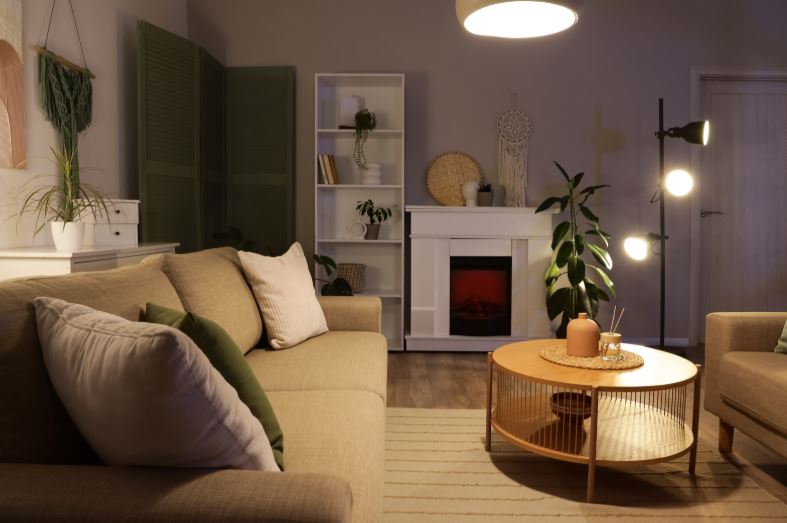
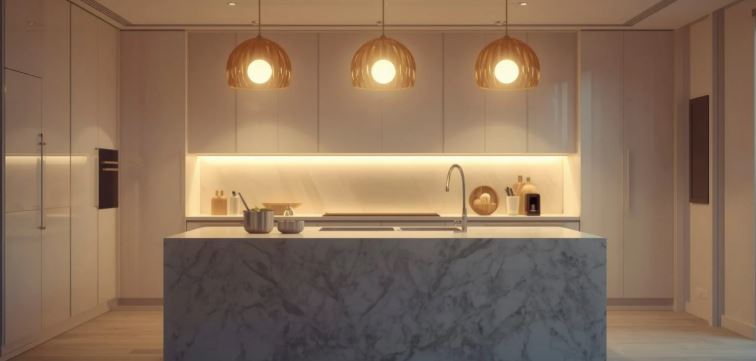
Ambient Lighting: Your typical overhead lights, ambient lighting encompasses the entire room, providing general illumination. It covers a space well enough alone, but only by collaborating with accent and task lighting does it truly elevate your living room. Ambient lights can come in recessed fixtures, chandeliers, or ceiling oysters.
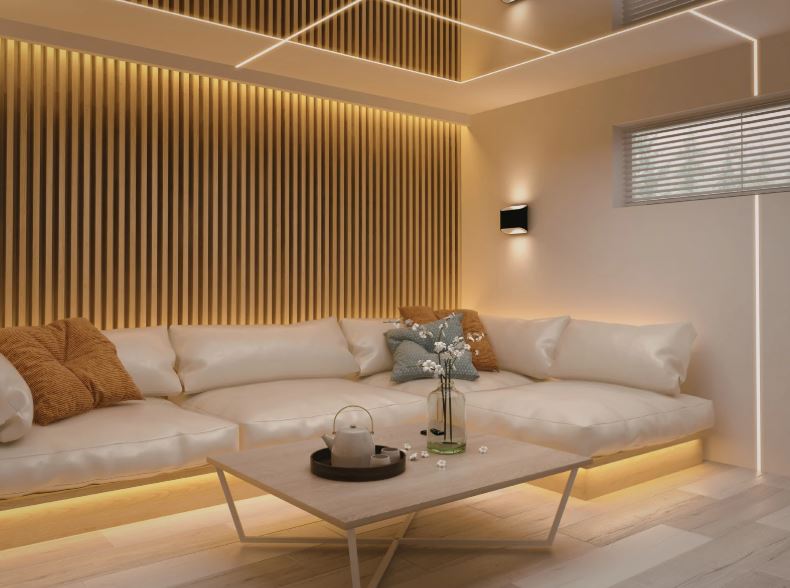
Accent Lighting: These lights often cover a small, specific area or display piece, and are used to highlight or provide depth. Subtle under-frame lights for a painting, LED strips lining display cabinets, or perhaps mini-spotlights to highlight a hard-won trophy or luscious house plant – these are all great examples of accent lighting at work. Yes, even those pulsating LED wall tiles count as accent lighting.
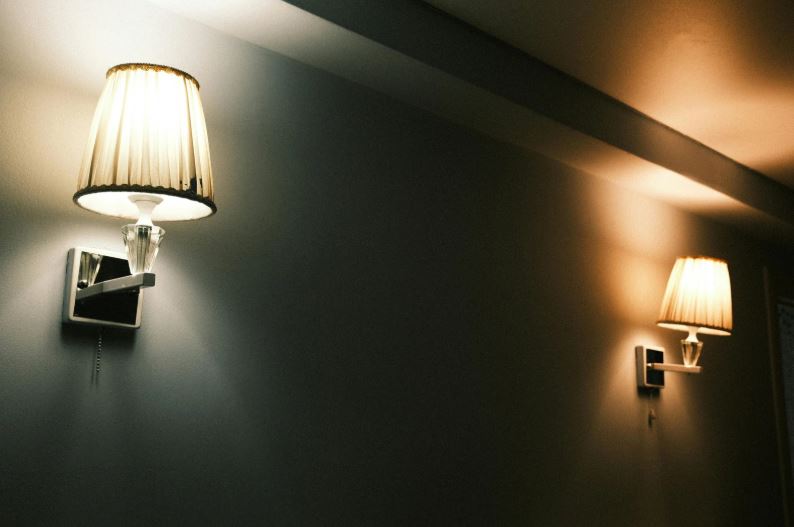
Task Lighting: Aimed at facilitating a particular task, these lights often cover a local area within the room. For your living room, consider having a seat-side lamp for reading. It can be anything from a small desk lamp, to a standing floor lamp. If your living room has a space for homework or writing, a sturdy table light or wall scone makes for great task lighting.
Adjustable Lighting
The ideal lighting for cosy family evenings and raucous guest gatherings will invariably be different. For this reason, it can be beneficial to have lighting that can adapt to different circumstances. There are a few ways to achieve this:
Adjustable Colour Temperature: It would be handy to have both cool and warm whites at your disposal. Cramming differing light temperatures into a single room used to be quite the feat, but now this can be achieved via smart lights. Now in 2026, it’s exceptionally common to find adjustable smart lights in all sorts of form factors, making changing hues as easy as opening an app. Many aren’t even limited to your typical home-friendly colours. If you wish to plunge your living room into deep rave purples, look for bulbs with full RGB support.
Adjustable Brightness: This function often came in the form of dimmer switches. If you didn’t already have one installed, it could be a pain to wire. Most smart bulbs also feature adjustable brightness, which is often also app-controlled. However, some people prefer the touch of a physical switch, which is where smart dimmers come in, with many allowing wireless control of a room’s brightness, provided you have the compatible lights. This allows for both moody movie nights and vibrant social gatherings.
Light Positioning
So, you have the right lights, but are they in the right places? There are a few considerations that might go unnoticed until everything is already installed.
Spatial Positioning: When it comes to putting down accent lights, try and keep the units properly distanced and even. Turning off your main lights, do your accents tend to pool together, is one side fully lit and the other dark? It may be hard to notice the contrast with your ambient lights on, but good accent spacing can make each showpiece its own attraction.
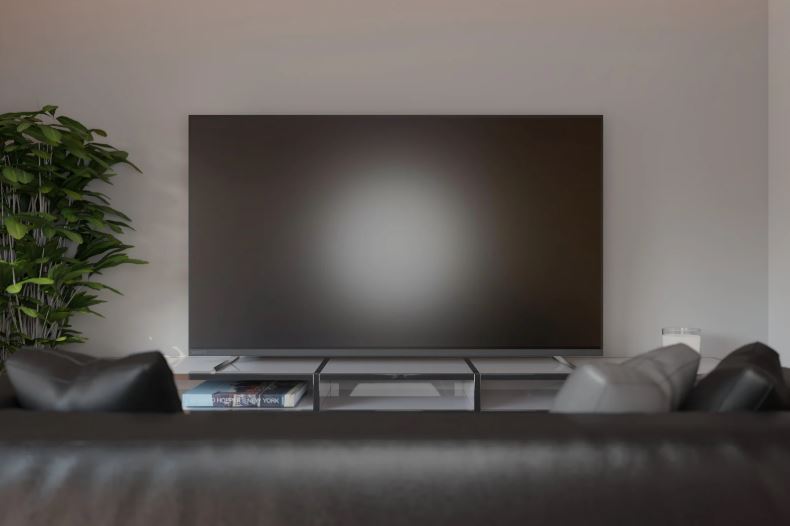
Glare: For those of you that enjoy streaming, gaming, or simply tuning in to the news, having a bright background lamp drown out your TV can be quite the glaring problem. Make sure overhead lights are positioned away from your TV, or vice versa. Similarly, pale furniture can reflect light, further brightening a room, while dark furniture can absorb a bit of that light.
Varying Light Types: Aside from LED strips and table lamps, you can consider applying indirect lighting, which first bounces off a surface before providing illumination. Adding pendant lights, wall scones, and corner lights can be useful to in making a room seem welcoming without being overwhelming. Finally, don’t forget about arguably the most important type: natural light. Adding it to the mix during daytime can create some seriously slick combos.
While typical room lighting is easy to achieve, it’s the details that really make your living space pop. From adding depth and colour diversity to spatial positioning, lighting can be masterfully used to breathe life into the centre of your home.